Choosing the right fly fishing line weight is crucial for beginners. Understanding the difference between line weights can significantly impact your success on the water, as it affects everything from casting distance to the types of fish you can target. As I embarked on my fly fishing journey, I quickly learned that line weight not only influences the performance of your fly rod and reel but also determines how effectively you can present your flies.
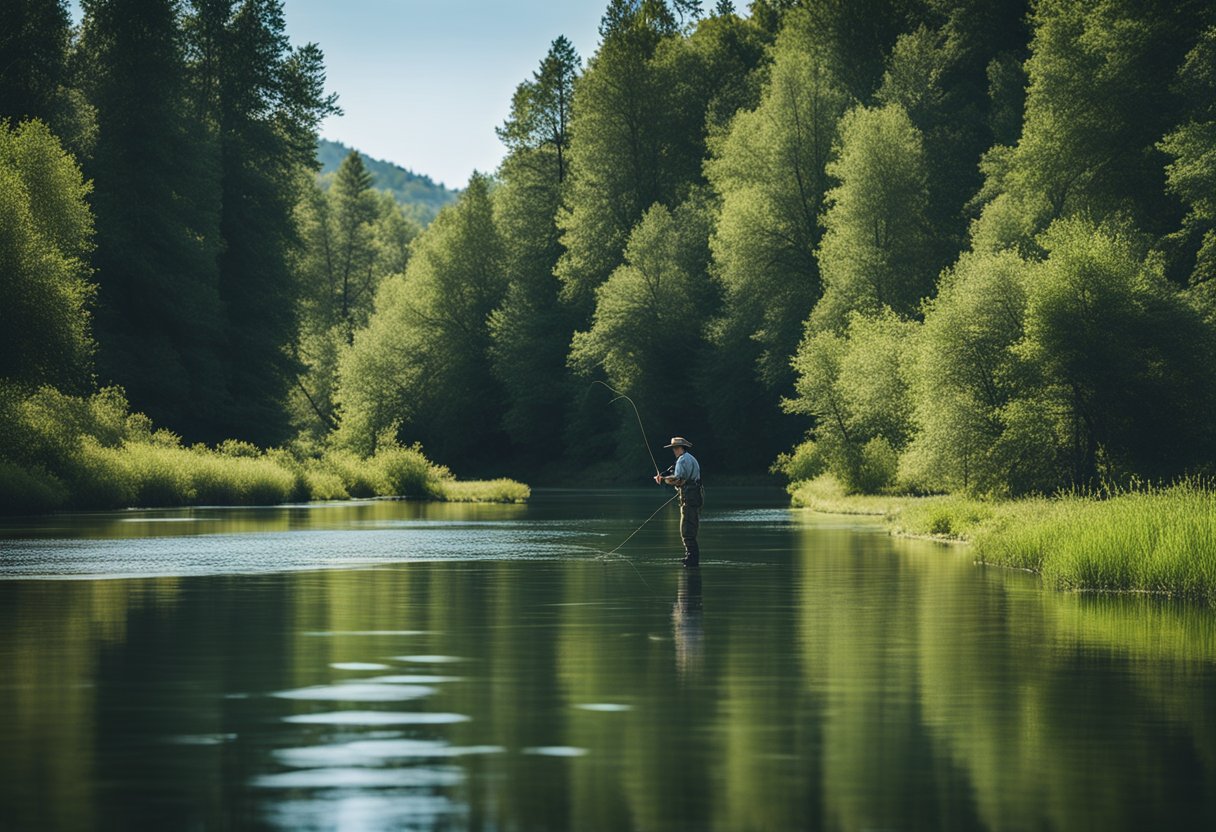
Fly lines are categorized by weight, typically ranging from 1 to 12, with lighter lines suitable for smaller streams and heavier lines designed for saltwater conditions. For saltwater fly fishing, selecting the appropriate line weight is essential due to the larger species and stronger winds encountered. The right tackle setup, including a matching fly rod and reel, enhances your ability to handle heavier targets in challenging environments.
As I explored the nuances of fly line weight, I realized that beginner anglers would benefit from understanding how these choices affect their overall fishing experience. With a solid grasp of line weights and their applications, I feel more confident in my ability to adapt my tactics to various fishing conditions and achieve the best results.
Fundamentals of Fly Line Weights
Understanding fly line weight is crucial for successful fly fishing. The right line weight influences casting ability, distance, and presentation. In this section, I will explore the specifics of line weight, how to choose the appropriate line for your rod, and the AFTMA standards that guide these choices.
Understanding Line Weight and Its Role
Fly line weight is a measurement that describes how heavy the line is in relation to its length. It plays a pivotal role in determining how well I can cast and present my fly. The American Fly Tackle Manufacturers Association (AFTMA) established a standard system that categorizes lines by weight, ranging from 1 to 14.
For instance, a lighter line (such as a 2-weight) is suited for delicate presentations and small streams, while a heavier line (such as an 8-weight) works well for bigger fish and windy conditions. The weight designation also affects casting; a line that is too heavy for my rod will lead to poor performance, while a line that is too light can make it difficult to deliver the fly effectively.
Choosing the Right Line Weight for a Fly Rod
Selecting the right fly line for my rod involves matching the line weight to the rod’s specification. Each fly rod is designed to work best with a specific line weight range, typically indicated on the rod itself. For example, if my rod is rated for a 5-weight line, using a 5-weight line allows for optimal performance.
It’s important to consider the type of fishing I plan to do. For smaller freshwater species, I might opt for a 3 or 4-weight line, while for larger saltwater species, a heavier line, like a 9 or 10-weight, becomes necessary. Additionally, understanding casting techniques—like using weight forward (WF) or double taper lines—can enhance my casting performance and accuracy.
Fly Line Weight Chart and AFTMA Standards
The AFTMA standards provide a clear weight classification for fly lines, helping me select the appropriate line. Below is a simplified fly line weight chart:
| Line Weight | AFTMA Designation | Common Uses |
|---|---|---|
| 2 | Light | Small streams, panfish |
| 4 | Medium Light | Trout, light bass |
| 6 | Medium | Bass, steelhead |
| 8 | Medium Heavy | Large bass, pike |
| 10 | Heavy | Saltwater, large fish |
Understanding these designations allows me to select the right line matching my desired fishing conditions. Each weight not only affects casting but also influences the leader and tippet setup I will use, ensuring I have the best chance of landing my target species.
Selecting Fly Line Weight for Beginners
Choosing the right fly line weight is crucial for any beginner. The proper weight enhances casting performance and improves the overall fishing experience. I will address the essential aspects of line weight, including basic principles, how rod action influences choices, and technique-specific considerations.
Starting with the Basics: Line Weight for Novices
For beginners, I recommend starting with a 5-weight fly line, as it strikes a balance between versatility and ease of use. The weight of the line corresponds to its ability to carry flies and affects the casting distance. Fly lines are categorized from 1-weight (light) to 12-weight (heavy).
A common choice for most freshwater fishing scenarios, such as nymphing or dry fly fishing, is the 5-weight line. It can handle a variety of flies and adapt well to different conditions. Using the right backing and line can make a significant difference in your performance and enjoyment.
How Rod Action Affects Weight Selection
Rod action plays a vital role in selecting the appropriate line weight. There are three primary types of action: fast, medium, and slow.
- Fast action rods bend primarily at the tip and are suitable for longer distances and heavier lines.
- Medium action rods bend more evenly, offering a balance that is ideal for beginners.
- Slow action rods flex throughout their length, providing greater sensitivity, especially when working close.
Using the right action for your chosen line weight enhances your casting stroke. For instance, a medium action rod paired with a 5-weight line allows for a smoother casting experience and better control.
Technique-Specific Line Weight Considerations
Different fishing techniques may require variations in line weight. For example, when nymphing, I often prefer a slightly heavier line to effectively detect subtle strikes. Conversely, when using a floating fly line for dry fly fishing, a standard 5-weight works well to present the fly delicately.
Casting distance is another factor. While longer casts may benefit from a heavier line, I find that practicing with a medium weight improves my casting precision. Remember to adjust your choice based on the fly patterns and the species targeted to optimize your tackle setup.
Fly Line Weights for Diverse Fishing Environments
Choosing the right fly line weight is crucial for successful fishing in various environments. The weight affects casting, accuracy, and overall effectiveness based on the species targeted and the conditions present.
Freshwater Fly Fishing: Matching Line Weight to Species
In freshwater environments, line weight often corresponds to the species I target. For small streams, I typically use lighter lines, like 3 to 5 weights. This allows for more delicate presentations and tight loops, essential when fishing for trout or panfish.
For larger species, such as bass, I might opt for a 6 to 8 weight line. This ensures I have the power needed for longer casts and fighting those fish effectively. Understanding the specific habitats, like lakes and rivers, helps me choose lines that suit the water conditions and target species.
Saltwater Fly Line Weight: Pursuing Larger Species
When saltwater fly fishing, the scenario changes significantly. I generally need heavier lines, typically ranging from 8 to 12 weights. This is crucial for casting larger flies and dealing with wind and current.
Targeting species like striped bass, tarpon, or redfish demands a line that can deliver power over distances. The heavier line aids in creating the speed needed for these larger fish and ensures I can make adjustments quickly during the fight. Each species may have its preferred setups, but being prepared with various weights is vital for success.
Environmental Factors Influencing Fly Line Selection
Several environmental factors influence my choice of fly line. Wind conditions are the most notable; stronger winds require heavier lines that can cut through without losing accuracy.
Water depth also plays a role. In shallower waters, lighter lines can provide a better presentation and avoid spooking fish. Conversely, deeper waters may require sinking lines to reach the targeted species effectively.
Temperature and water clarity can also affect decisions. Warmer waters might lead to more aggressive feeding, allowing me to use heavier setups, while clearer waters might demand lighter, more discreet presentations.
Advanced Considerations for Fly Line Weight

When choosing fly line weight, it’s essential to consider specific techniques and conditions to optimize performance. Understanding how different line weights affect casting and the types of lines available will enhance your fly fishing experience.
Matching Line Weight with Fly Fishing Techniques
I find it critical to match fly line weight with the fishing technique you plan to use. For instance, a fast action rod requires a lighter line to enable quick loading for precise casts. When targeting species like steelhead or tuna, I prefer a line that matches the weight of the rod to ensure smooth transitions.
Utilizing the right weight impacts the ability to perform techniques such as the roll cast. This technique thrives when the weight allows for effective energy transfer, while too heavy a line can lead to poor performance. Additionally, I consider the rear taper and belly length of the line; these factors influence distance and accuracy.
Speciality Lines and Weight Considerations for Advanced Anglers
Advanced anglers should explore specialty lines tailored to their fishing conditions. For example, sinking lines are ideal for targeting species like marlin or deep water carp. These lines often have varying sink rates, so selecting the correct weight helps achieve the desired depth.
Moreover, I sometimes opt for double taper lines when fishing for brook trout or rainbow trout in small streams. This line type allows for delicate presentation and easier roll casts. I find Cortland offers an excellent variety of specialty lines that cater to these needs.
Impact of Line Weight on Casting Techniques and Distance
The weight of the fly line significantly affects my casting techniques and achievable distances. A heavier line can offer increased distance but may sacrifice control. Conversely, lighter lines provide more precise presentations, essential for fishing with dry flies.
When casting, I consider how the plastic coating interacts with the rod’s action. A well-matched line enhances loading and unloading during the cast, optimizing distance and accuracy. For example, using a heavier line with a faster action rod helps me cover more ground when targeting open water, while lighter lines add finesse to close-range fishing.